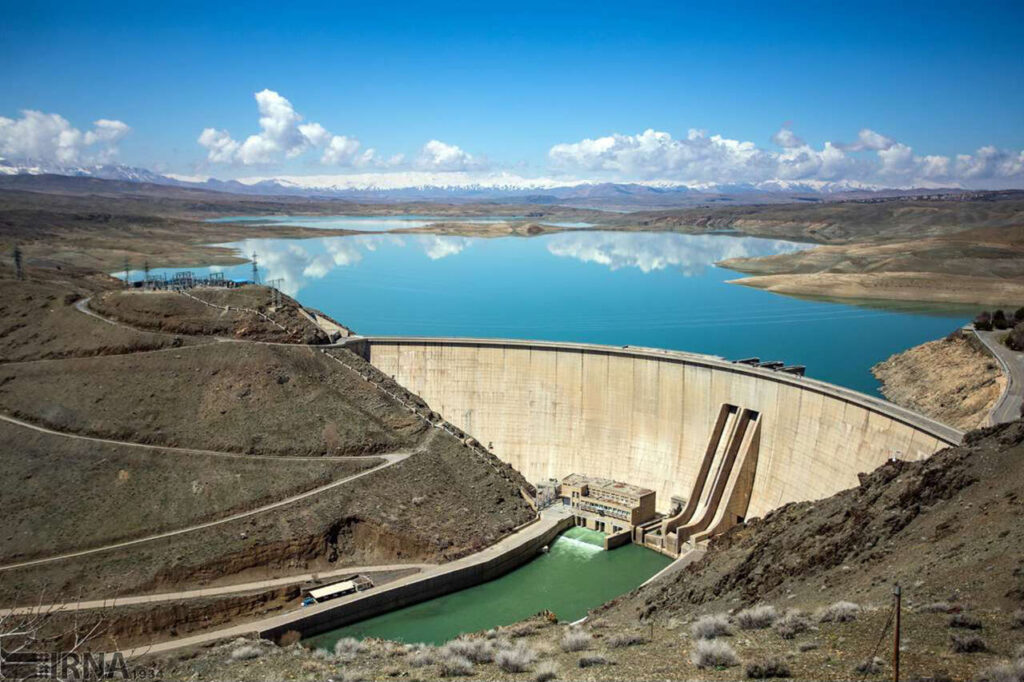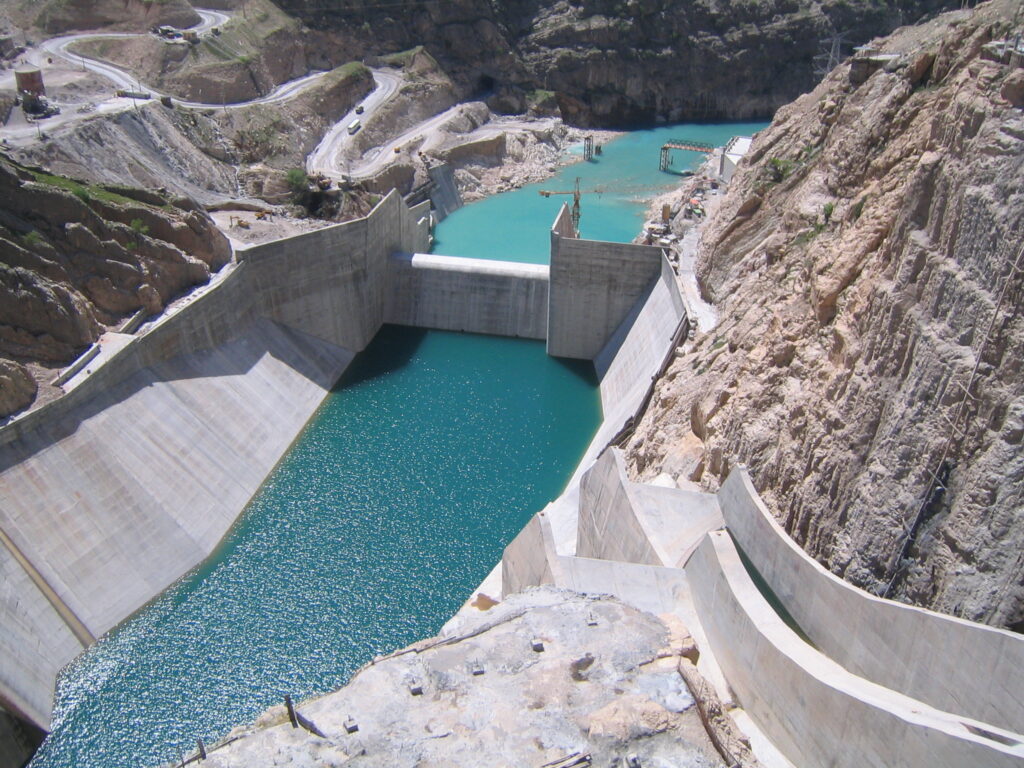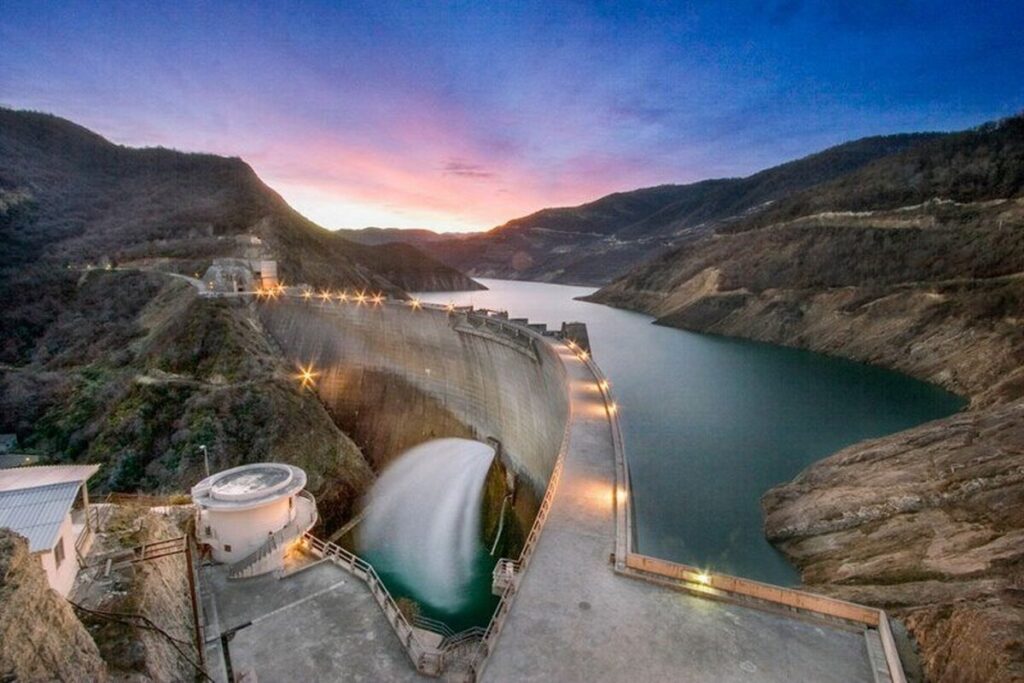
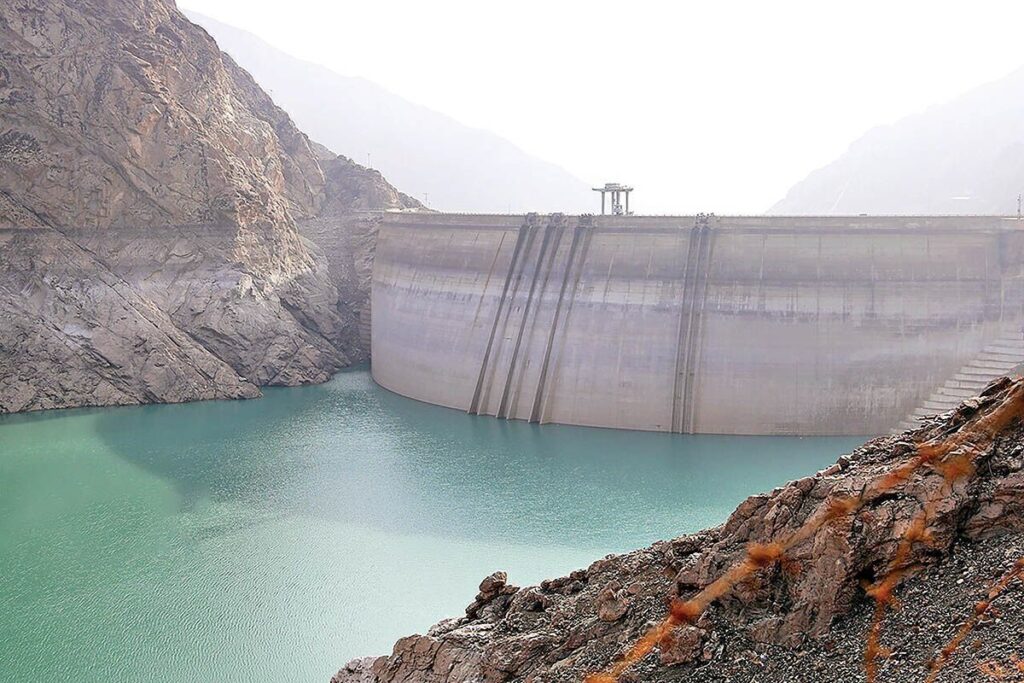
Constructed between 2002 and 2006 on the Shahrud and Taleqan Rivers in Alborz Province, the Taleqan Dam is a 109 m-high structure that impounds around 420 million cubic meters of water. Owned by the Regional Water Company of Tehran, it plays multiple strategic roles: as one of the main water sources for the Tehran metropolitan area, as a regulator for river flows, and as a hydropower facility. The dam includes a unique submerged (under-lake) power plant with a capacity of approximately 18 MW, making it a key component of both water security and renewable energy infrastructure.
In addition to its original functions, more recent phases have focused on expanding water transfer infrastructure — notably a major pipeline project to transport water from the dam towards Tehran, Karaj, and Qazvin — in response to mounting water scarcity pressures.
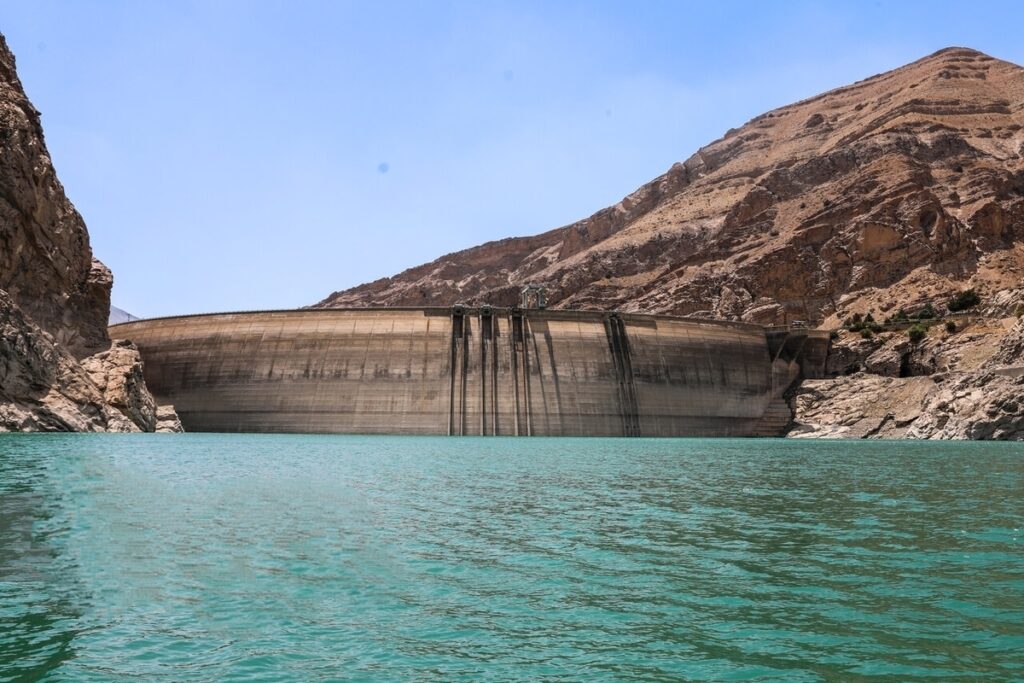
The dam height is 109 m, and it holds about 420 million m³ of water.
Installed hydropower capacity of ~18 MW.
The power plant is uniquely built under the reservoir.
Side-channel spillway capacity: 2,040 m³/s.
It’s one of the five main water sources for the Tehran metropolitan area.
A major water transfer project (~62 km pipeline) provides up to 150 million m³/year to Tehran, Karaj, and Qazvin.
Iran Water and Power Resources Development Co
Alborz Province
Iran
The Challenge
The Taleqan Dam project addresses a very complex nexus of water scarcity, urban demand, and energy generation. Tehran, Karaj, and surrounding regions face chronic water stress — exacerbated by climate variability, drought, and growing population. Meeting drinking-water demand while also generating hydropower posed technical challenges: the integration of a hydropower plant below the reservoir required specialized design and civil works; plus, transferring large water volumes over tens of kilometers (via the newly built 62 km pipeline) involves high hydraulic pressure, potential energy losses, and risk management. On top of that, siltation and sediment accumulation in the reservoir, as well as managing fluctuating water levels, add long-term operational risk. Moreover, recent years have seen very low dam reserves, making reliable water delivery even more challenging.
What did RMTEC do
We provided comprehensive technical support covering hydraulic analysis, system integration, and operational optimization to ensure stable performance across all components of the project. Our team developed detailed engineering strategies for water routing, pressure management, and sediment mitigation, enabling the submerged power plant and the transfer pipelines to operate efficiently under varying flow conditions. Through advanced modeling and performance monitoring frameworks, we enhanced reliability, reduced operational risks, and ensured that both energy generation and water-supply functions could work in full harmony throughout the year.
The Results
- Improved reliability of water supply to major urban zones.
- Optimized hydropower generation with stable year-round output.
- Reduced operational risks through advanced monitoring systems.
- Long-term enhancement of regional water security.