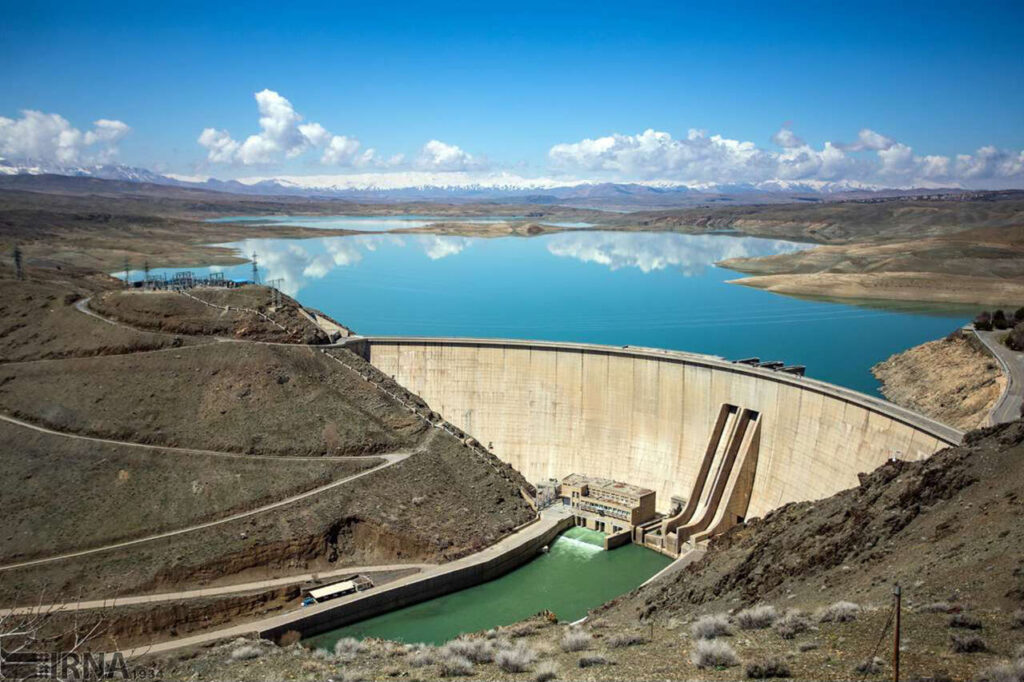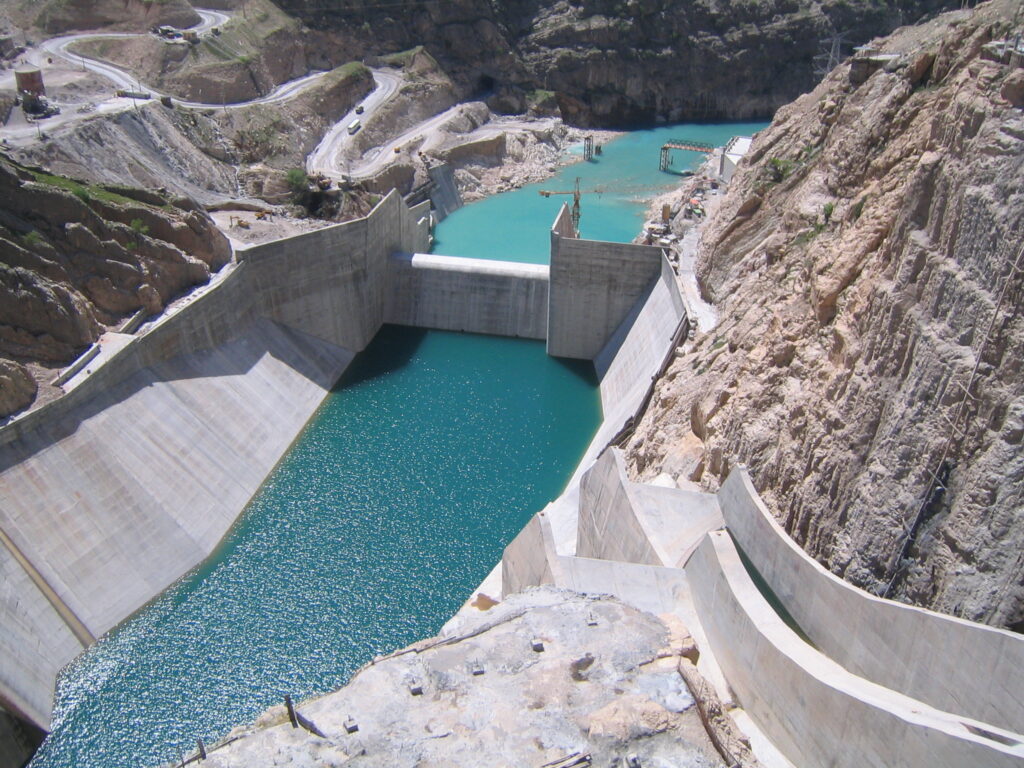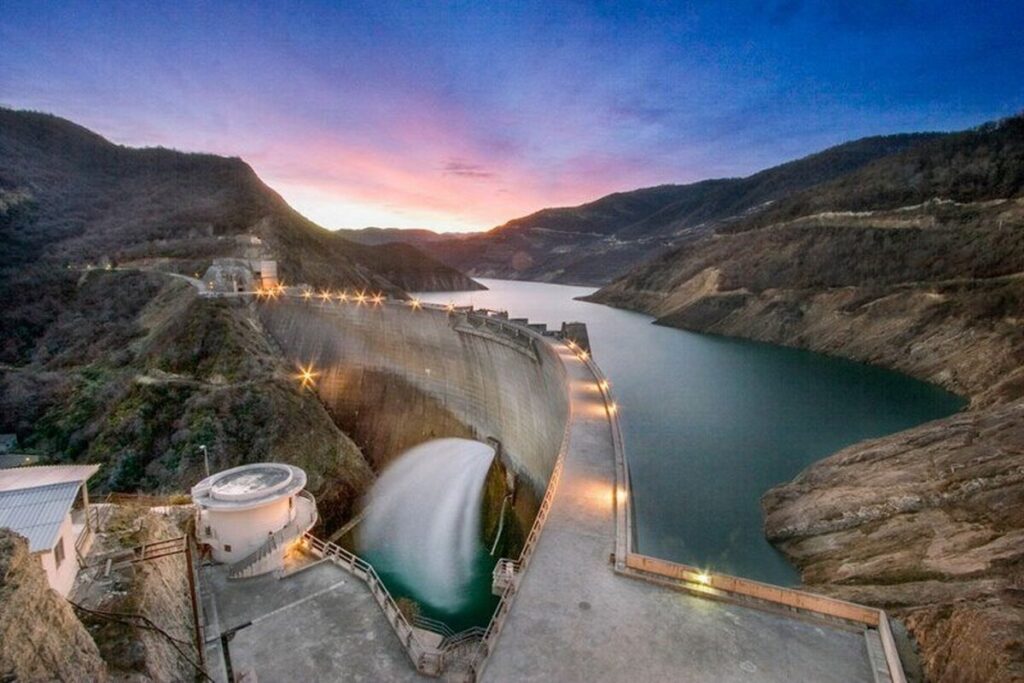
The primary purpose of the dam is to supply up to 1,378,000,000 m3 of water annually to the 48 km long Nowsud Water Conveyance Tunnel where it will irrigate areas of Southwestern Iran. The dam also has a 210 MW hydroelectric power station.
The dam also has a 210 MW hydroelectric power station. Construction on the dam began in 2009 and the dam began to fill its reservoir in late November 2015. The Darian Dam Archaeological Salvage Program was planned by Iranian Center for Archaeological Research before flooding the reservoir. As a result, a number of important archaeological sites were discovered and some were excavated.
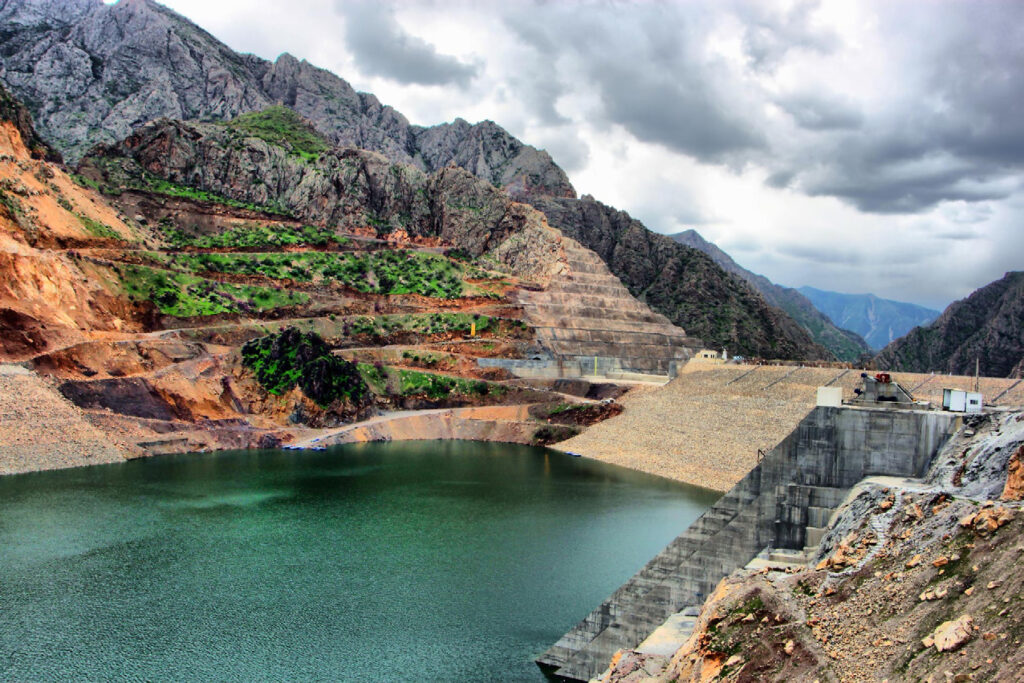
Power Station Commissioned: 2018, with 3 Francis-type turbines, total capacity 210 MW.
Dam Type & Location: Embankment rock-fill with clay core, impounding the Sirvan River.
Dam Height: 169 m (foundation), 146 m (thalweg).
Dam Length & Volume: 368 m long, total volume 9.7 Mm³.
Construction & Design: Designed by Stucky (France), consulted by Mahab Ghodss; Farab Co. awarded contract in 2010.
Diversion Tunnel: Completed June 2011, enabling reservoir and construction management.
Iran Water and Power Resources Development Co
Paveh, Kermanshah,
Iran
The Challenge
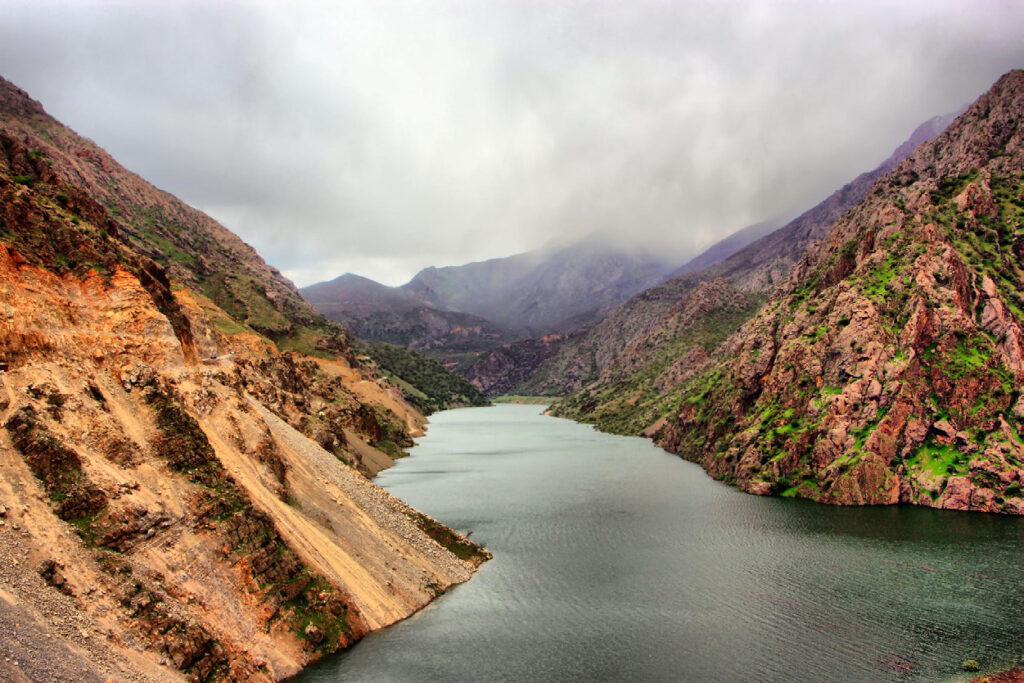
The Daryan Dam & Hydropower Project, located on the Sirvan River near the Iran–Iraq border, presented significant geological, hydraulic, and cross-border water management challenges. The project required the construction of a 169 m high RCC dam with a large underground powerhouse and a 48 km water transfer tunnel (the Nosoud tunnel) designed to divert flows toward the Kermanshah plains. Highly variable sediment loads, karstic limestone formations, and complex faulted rock masses demanded advanced geotechnical treatment to ensure long-term stability and watertightness. Maintaining controlled river flow during construction, mitigating reservoir leakage risks, and ensuring downstream water availability for Iraqi territories required precise hydraulic modeling and staged impoundment planning. The combination of deep underground works, high internal water pressures, and regional seismicity made engineering design and construction safety major technical priorities.
What did RMTEC do
RMTEC provided comprehensive engineering support across hydraulic, geotechnical, and structural disciplines. Detailed rock mechanics investigations and 3D numerical modeling were performed to define tunnel support classes, grout curtain requirements, and dam foundation treatment. RMTEC evaluated hydraulic behavior under variable reservoir levels, optimized discharge structures, and supported reservoir leakage mitigation strategies in karst zones. Advanced design methodologies were applied for the hydropower cavern, pressure shafts, and high-head penstocks to ensure structural resilience under seismic and transient load conditions. Continuous coordination with regional authorities ensured proper downstream flow release planning to avoid transboundary water disputes.
The Results
- Stable and watertight dam foundation achieved
- Efficient energy generation with enhanced water transfer capacity
- Long-term structural resilience under seismic loading
- Improved regional water availability and agricultural benefits