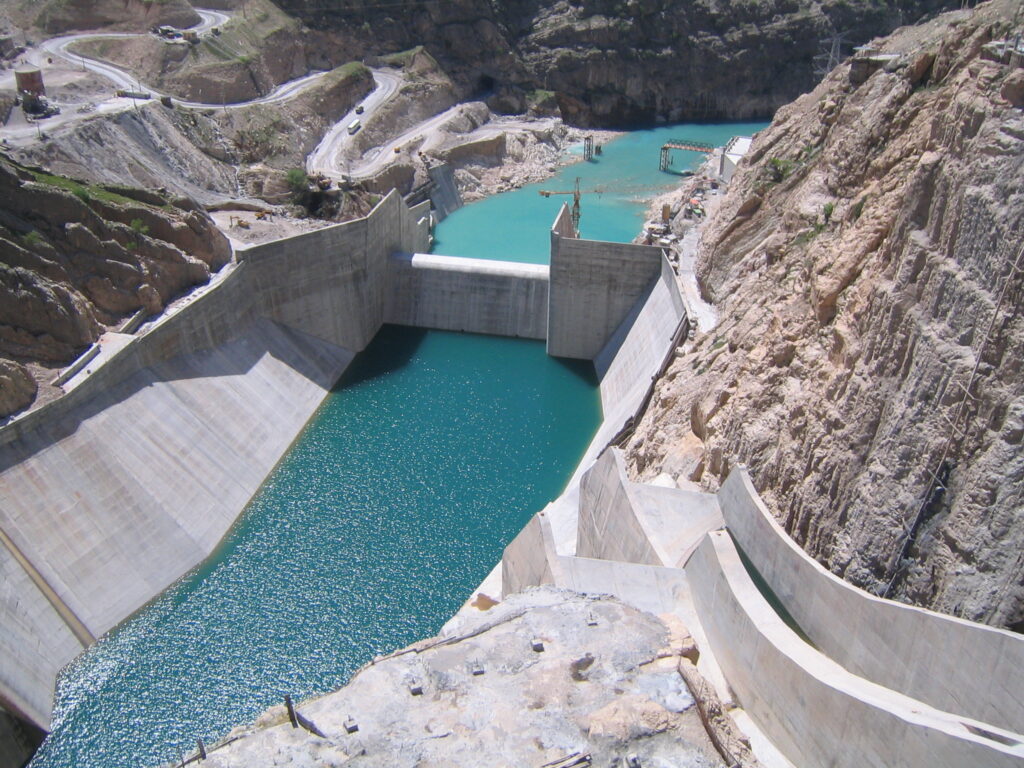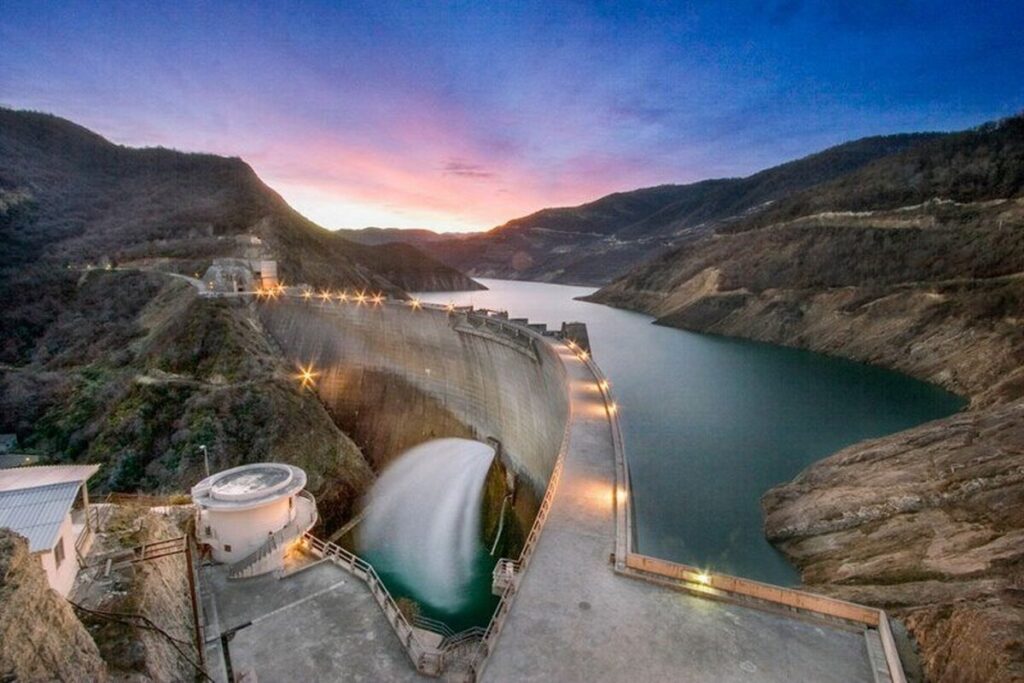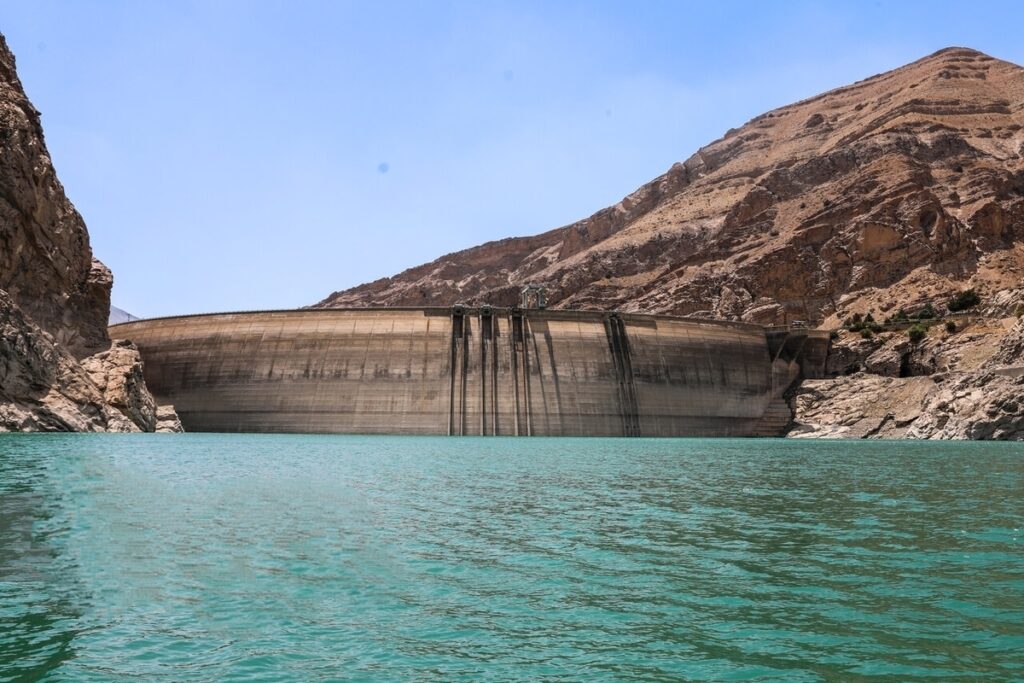
The Khoda Afarin Dam is an earth‑fill embankment structure located on the Aras River, straddling the border between Iran (East Azerbaijan Province) and Azerbaijan (Jabrayil region). Construction began in 1999, and by 2008 the dam started impounding water, with its formal inauguration around 2010. Designed to serve both hydropower generation and irrigation, the dam creates a reservoir of approximately 1.612 billion m³ with about 1.495 billion m³ active capacity. Its installed power capacity is 102 MW, using two horizontal Kaplan turbines. The project supports irrigation for tens of thousands of hectares and helps regulate river flows, while also symbolizing cross-border cooperation.
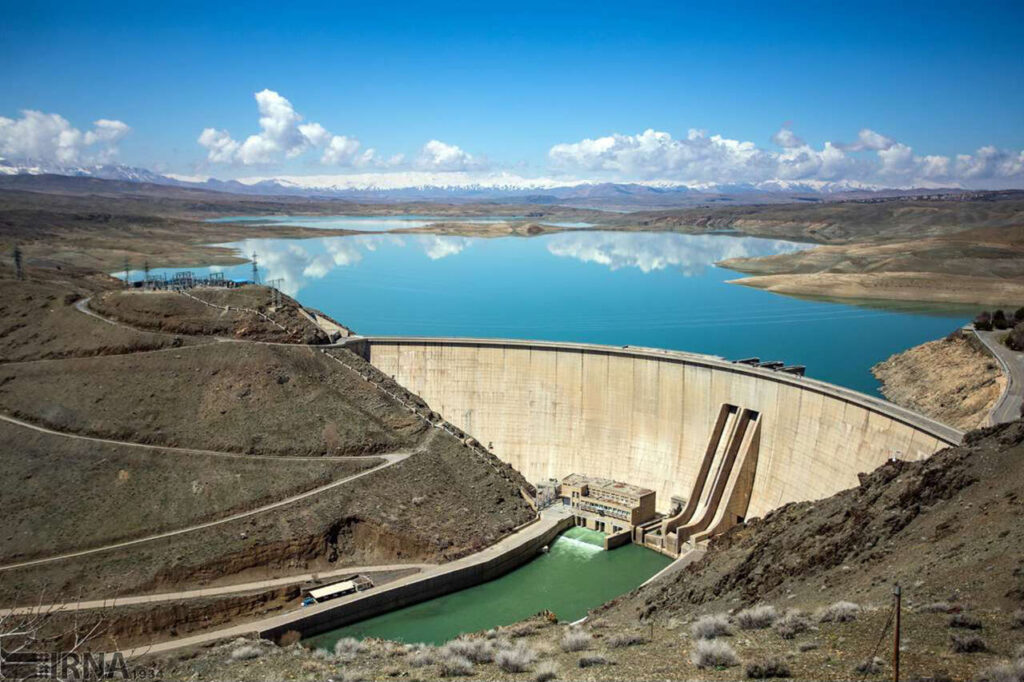
Earth‑fill embankment dam, 64 m in height.
Dam crest length: ~400 m.
Reservoir total capacity: ~1.612 km³.
Active (usable) capacity: ~1.495 km³.
Installed hydroelectric capacity: 102 MW.
Two Kaplan turbines (51 MW each) in surface power‑house.
Iran Water and Power Resources Development Co
East Azerbaijan Province
Iran
The Challenge
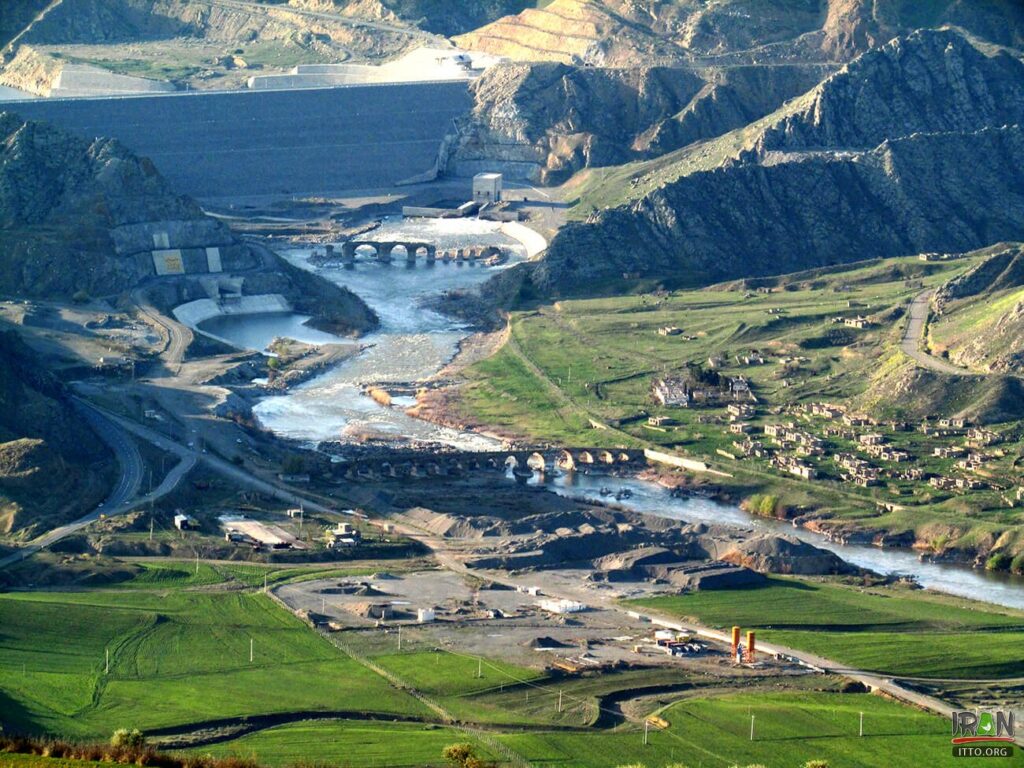
The Khoda Afarin project faced complex geopolitical, technical, and environmental challenges. Being a transboundary structure, it required bilateral coordination on design, financing, and operational frameworks across Iran and Azerbaijan. Technically, building a 64 m-high earth‑fill dam on the Aras River demanded robust geotechnical design to ensure stability, seepage control, and long-term integrity. The reservoir’s large capacity also carried risks of sedimentation, water losses, and seasonal fluctuations. On the hydropower side, integrating two Kaplan turbines into a surface power plant had to account for varying flow rates, efficient water intake, and pressure regulation. At the same time, the project aimed to irrigate a large area (tens of thousands of hectares), which meant designing a reliable water-release and canal system, while maintaining reservoir levels for power generation. Finally, archaeological discoveries during construction (Bronze Age sites) required project delays, sensitivity, and adaptive planning.
What did RMTEC do
We contributed by designing and optimizing the dam’s geotechnical and hydraulic systems, ensuring long-term stability and seepage control in the earth‑fill structure. Our engineering team developed advanced hydraulic models to size and operate the water intake, outlet, and turbine flows, making sure generation and irrigation needs could be balanced efficiently. We also supported the development of a transboundary management framework between stakeholders, enabling coordinated operation, water sharing, and flood management. To address environmental and archaeological constraints, we implemented a monitoring and mitigation plan to protect discovered heritage sites, while allowing the impoundment process to proceed safely and respectfully.
The Results
- Generated ~102 MW of clean, renewable electricity.
- Provided water for irrigation of around 75,000 hectares.
- Enhanced cross-border water cooperation between Iran and Azerbaijan.
- Improved river flow regulation, reducing flood risk and stabilizing seasonal flows.